Whole-Company Virtual Retreat
An 80-person creative agency turns its first virtual company retreat into something better than the in-person tradition it replaced.
An 80-person creative agency turns its first virtual company retreat into something better than the in-person tradition it replaced.
Movement Strategy is a social-first digital agency with offices in LA, Denver and New York, founded on a simple idea: turn brands into "internet people" and internet people into fans. By the autumn of 2020 the company had grown fast, adding 15 to 20 new hires in just five months, almost entirely during lockdown. Many of those new team members had never met a single colleague in person.
Every year, the whole company flew to Colorado for a retreat: snowboarding, games, good food and drinks, a few activities in small groups - the kind of unstructured time that builds real friendships. COVID made that impossible in 2020.
I was 'optimistically skeptical', but as we went through the onboarding, we started to feel really excited.
Jordan - VP Of Operations
Movement's HR Director, Colette, started researching what a virtual alternative might look like and found exactly what you'd expect: pre-canned team-building games, generic icebreakers, and the kind of forced fun that makes a retreat feel like a chore. She wanted something that actually reflected the company's culture, not a template borrowed from somewhere else. She reached out to PeopleStorming in mid-August about hosting Movement's first virtual retreat in October.
PeopleStorming put together a proposal laying out the levels of service on offer and, more importantly, how the design process itself would work. Movement's leadership had never hired retreat facilitators before. In past years, the leadership team planned everything in-house.
What sealed it wasn't a sales pitch. It was the structure of the discovery and design process itself, and the promise of a clear set of objectives before a single activity got chosen.
Movement commissioned PeopleStorming with around eight weeks until the event.
The decision to work with PeopleStorming was easy. We interviewed a few different companies, but you guys just matched the vibe of our agency.
Jason - CEO & Co-founder
Two days of virtual activities can't be designed from a brief alone, especially for a team that had never run one before. The process started with a company-wide survey, sent to every Movement employee, going well beyond logistics. Alongside practical questions (timezone, dinner schedule, comfort with tools like Zoom and Mural), the survey asked things like:
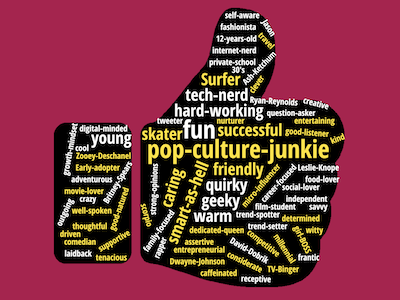
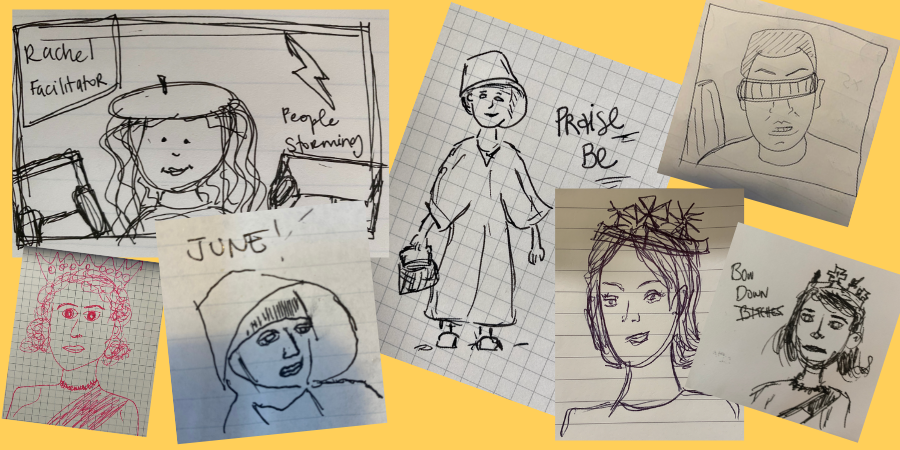
The answers did double duty. They surfaced real constraints (who needed to be offline for childcare, who was still onboarding and had never met their team, ...) and they became raw material for the retreat itself: a word cloud built from real answers, an illustration commissioned from the team's own description of their company's personality, the seed of a few running jokes that lasted the whole event.
It was fantastic that you not only spoke with the partners but also surveyed everyone at the company to understand what they wanted... it gave us a grounded set of objectives that focused everything we did.
Kate - VP Of Business Strategy
From there came a round of leadership interviews, partly to vet the themes and design principles that had emerged from the survey, partly to surface the things people don't write on a form: concerns about the retreat turning into a COVID 'commiseration-fest', worry about whether quieter or newer employees would feel included, disagreement among leaders about how much of the two days should be business versus pure fun.
All of it fed into a shared design document: a purpose statement, a ranked list of possible outcomes (some included, some deliberately cut), and a short set of design principles that governed every decision that followed. One of them:
Avoid Zoom fatigue: blend async and sync activities.
That single principle shaped almost everything about the agenda, from the optional pre-event activities to the live sessions.
The theme for the event also emerged from this process: Enjoy The Journey, Even In 2020.

The retreat ran across two core days, live from 9am to roughly 3pm Pacific to respect everyone's working hours. It also included a layer of optional, asynchronous activities running before, during, and afterward.
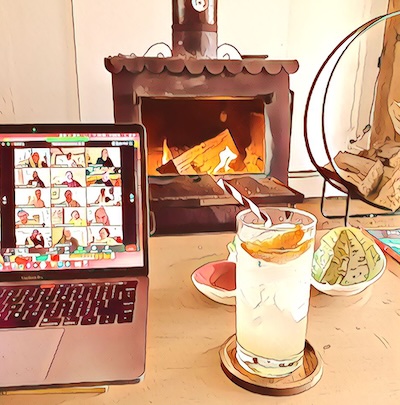
Before the event, a dedicated retreat website went live with a before-during-after structure. It had a dynamically updating agenda that showed each activity in the participant's own timezone and highlighted whatever was happening at that moment. There was a Slack channel seeded with hype content, volunteer-led yoga and watch parties, and "personal user manuals" due ahead-of-time so people could start learning about each other before the kickoff. Cocktail kits and retreat swag were shipped to every employee's home, with delivery timelines project-managed in parallel with the rest of the design work.
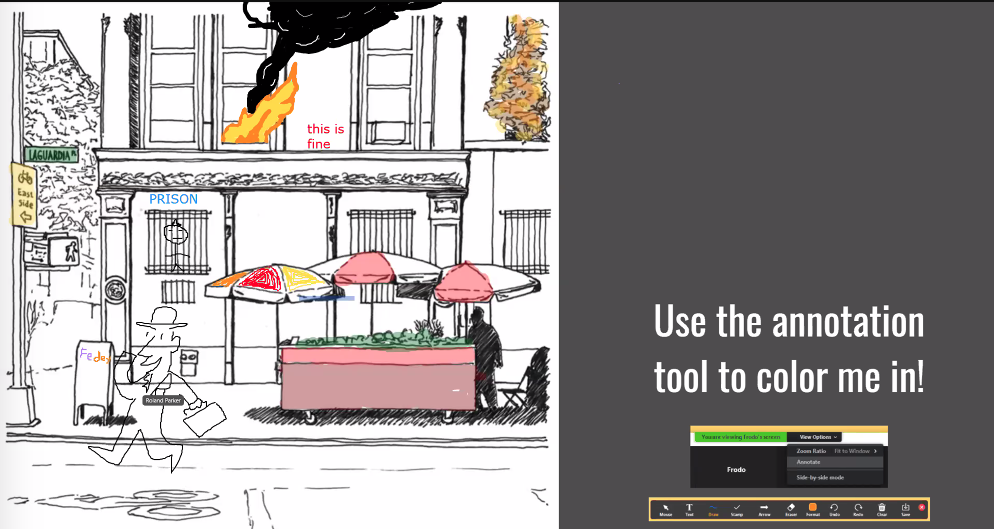
The core activities included...
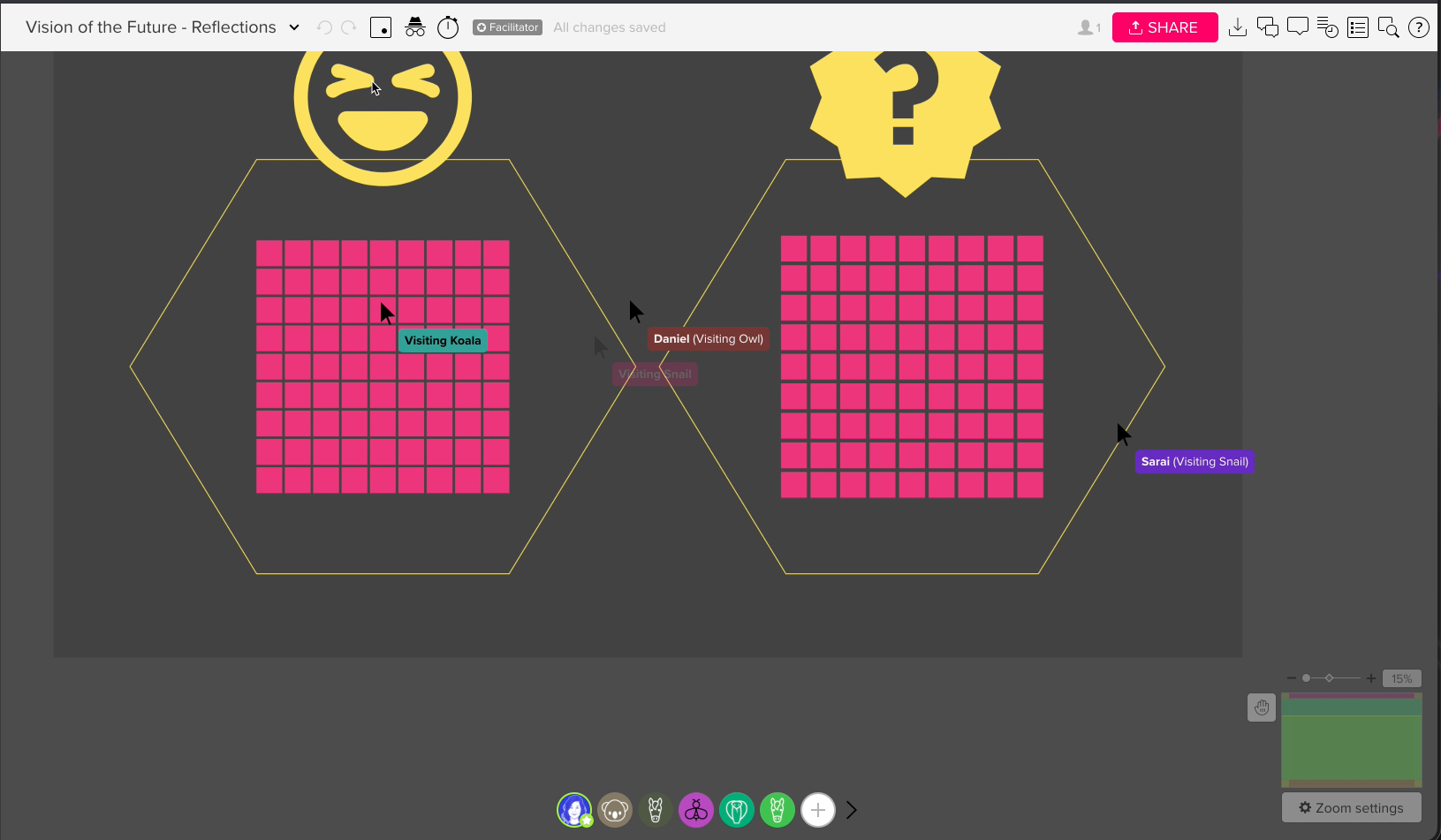
The Epic Rock Paper Scissors game was my absolute favorite. I've already told clients and friends about it. I could have played it for an hour!
Kate - VP Of Business Strategy
The Slack channel could barely keep up during the Rock Paper Scissors tournament...
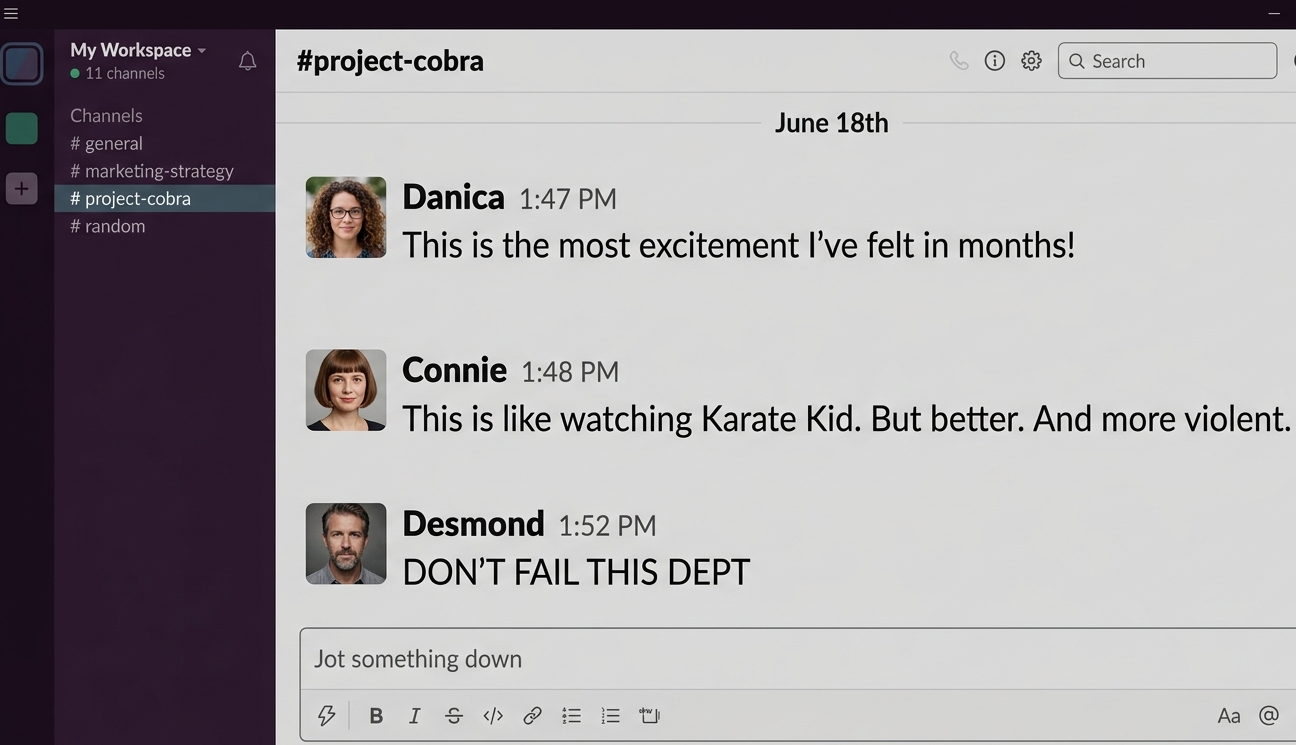
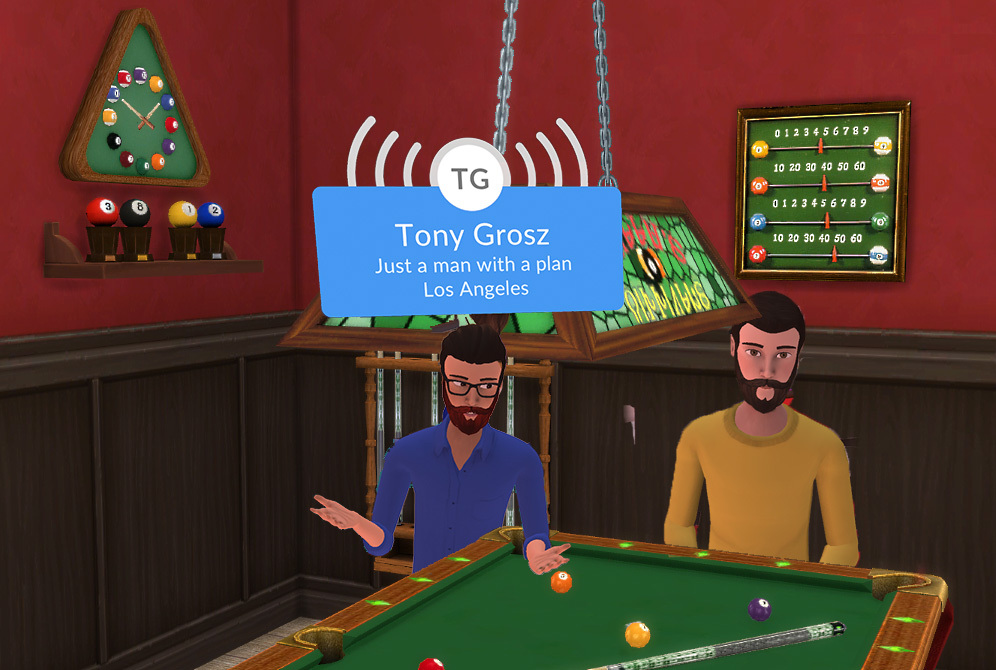
The virtual-reality lounge took on a life of its own. As a prank, someone faked a screenshot claiming to have found a 'secret room' hidden in the venue and shared it in Slack, and half the company spent twenty minutes hunting for a room that didn't exist.
Going in, the worry was that people simply wouldn't show up for a two-day virtual event, so almost every session was built as optional and low pressure. In practice, the entire company attended nearly every session across both days.
I would 100% hire PeopleStorming again. It was wildly successful... The two days of the retreat were two of my favorite days at work this year.
Kate - VP Of Business Strategy
Beyond attendance, fun, and energy, the retreat produced a number of enduring results...
The personal user manuals were probably the biggest hit overall. They've become part of our mandatory onboarding process, and they're used internally to help teams work better together, both within teams and across departments.
Colette - EVP People & Culture
Movement's leadership team said, consistently, that they could not have built this themselves, and that they wouldn't run a future retreat, virtual or in-person, without professional facilitation again.
The games were a hit because they weren't forced 'icebreakers'... we also loved the 'RetreatFest' digital experience.
Jordan - VP Of Operations
We would absolutely hire PeopleStorming again. You have been a fantastic partner, and we know this is the beginning of a long-term relationship.
Jason - CEO & Co-founder
I literally felt like you were a part of our team; you took our culture, soaked it up, and then created everything seamlessly.
Colette - EVP People & Culture
I cannot think of a thing they could have done better. Their facilitation skills were amazing.
Edgar - Art Director